 Adrian Serafin
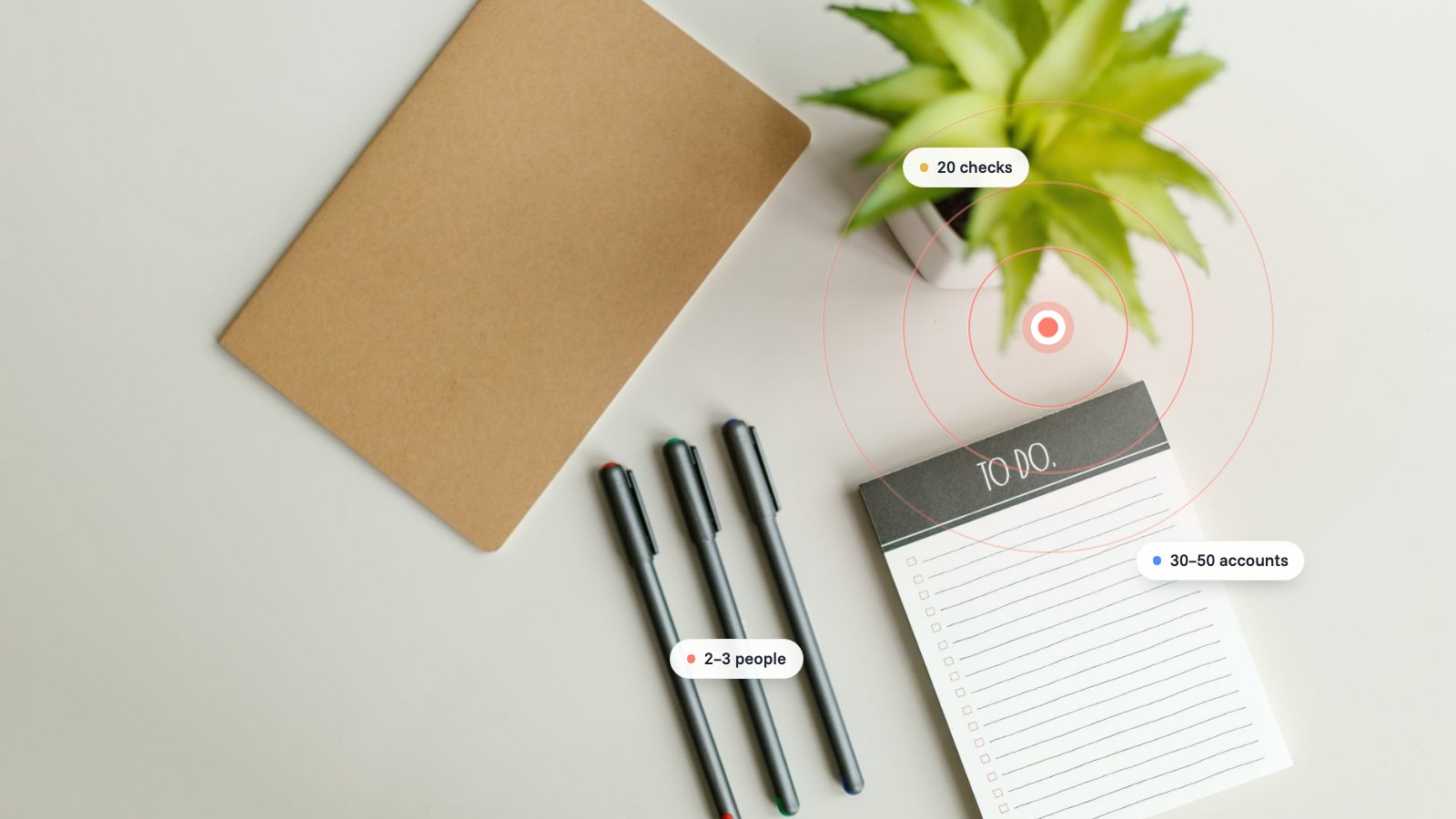
Week four is where I have watched most account-based campaigns go quiet. Week one went fine: invitations were accepted and the first replies came in. Then client projects came back. By the fourth Monday half the accounts had stalled after the first message, and nobody knew what came next.
Almost every time, something had been skipped before the first message, so I now run twenty checks before anyone writes. The reasoning is in my step-by-step guide to an ABM campaign; this is the checklist companion. An unticked box means the message waits.
Offer and ideal customer profile
- Describe the ideal customer profile in one paragraph. Industry, size, country, what they buy and in what situation. Done when a colleague can use it to sort ten companies into yes and no and land on the same answers as you.
- Write the anti-profile. Some companies look like a fit and never buy: too small for the budget, or an in-house team doing what you do. Mine names three kinds of company I turn away.
- Finish the sentence "We do our best work when a client…". The second half has to be a situation, "has just lost its second developer this quarter", rather than an adjective like "ambitious", and it becomes the test for every account.
- Pick one offer and one problem for this campaign. A campaign about everything you do reads like a brochure and gets a brochure's reply. The box closes when the problem fits in a sentence a buyer would say aloud.
The list
- Keep the list to 30–50 accounts. Each account needs research and a sequence of steps for two or three named people; at a few hundred, week four collapses under the arithmetic. John Dawes of the Ehrenberg-Bass Institute puts the share of business buyers in the market in any given quarter at roughly 5%4. On a list of forty that is two companies buying this quarter, which is why the next box exists.
- Attach one dated, sourced event to every account. A job advert for a role tied to what you sell is the clearest one; a new head of sales works too. No blanks in that column; accounts without an event go on a watch list.
- Check you have the right company. Plenty of firms share a name with a company abroad, or belong to a group that decides elsewhere. I check that the website, the company register and the LinkedIn page point to the same business.
- Mark current clients and open deals. The worst message of a campaign is the cold invitation a colleague sends to the finance director of an existing client. The CRM export settles it.
People
- Find two or three people per account. Forrester puts the average at 13 internal stakeholders and 9 external participants influencing a purchase2; at an 80-person firm the number is smaller. In my experience it is rarely one person. There is the person who signs and the person who will live with your service. If Sales Navigator is your tool for this, here is what it costs and what comes after the search.
- Never stop at the CEO. Among the 288 Polish software development and IT services firms in my October market report, 125 of the 383 decision-makers found were CEOs or managing directors1. My guess is that a company register lists the board and little else. The CEO replies "interesting, send me the details", and the committee never hears of you.
- Plan how you reach the people the data does not show. In the same set, no decision-maker at all turned up at 73 of the 288 firms, and only one at 971. For more than half the list, then, the rest of the committee comes from the careers page or the first person who replies. I have not run the same count on British or German firms, so the number to watch on your own list is how many accounts have only a single name next to them.
- Check the person still works there. Profiles lag behind reality, and so do company registers. A job title that matches the company website, or a post from the last quarter, is enough.
Content
- Put a fact about the company in the first sentence. In a Gartner survey of 632 B2B buyers, 73% said they actively avoid suppliers who send irrelevant outreach3. My test is blunt: if the first sentence could go to any other company, it goes back.
- Keep the invitation note within LinkedIn's character limit. LinkedIn's help pages allow a free account a 200-character note and Premium members 300, and contradict each other on how many invitations with a note a free account can send: five on one page, three a month on another5. The limits that matter are in my piece on ads versus your team's profiles. The note names the event and asks for nothing.
- Have one piece ready to send, with your opinion attached. A post or a short article, plus one sentence on why it matters to this company. Both exist before the first invitation goes out, because by week three there is no time.
- Draft the second message from a different angle. Same problem, a different door: the first message talked about the deadline, so the second talks about what the deadline costs in people. Ticked when it would still make sense had the first never been sent.
Rhythm and measurement
- Turn the campaign into daily tasks with names on them. Each open account has a next step with a date and an owner, and someone checks the overdue ones each morning. If the plan cannot tell you what happens on a Tuesday in week five, it is not finished.
- Run every account through the same seven-step sequence. A reaction to a post, an invitation with a note, a first message once they accept, the piece with your opinion, a second message from a new angle, a second person, and a conversation, with each account's current step written where the team can see it.
- Count conversations. Accepted invitations grow on their own and tell the board nothing. The Friday number I trust is the count of accounts where at least two people have replied.
- Set a return date for the accounts without an event. Signals go stale: a job advert from six months ago has probably been filled, and a company with no reason in October may have one in January. Every name on the watch list gets a date, and that date is the tick.
Radar ICP ticks three of these boxes before a company reaches your campaign: it checks the company against its website and the company register, dates every signal with a link to its source, and lists the people on the buying committee with their role. The rest of the list is still your work.
To see this for your own market, enter your work email on radaricp.com/en/try; a free report with the first companies in your market that show a buying signal arrives a few minutes later.
Twenty boxes sounds like a lot for a campaign of forty companies. The first four go quickly. The list earns its keep in week four, when the question is why nobody has written to the second person at a company that replied in week two.
Sources
- Radar ICP: own data from the radar of Polish software houses and IT services firms, as of 21 October 2026 (288 companies in the radar), computed 6 November 2026. radaricp.com
- Forrester: The State Of Business Buying: Risk-Averse Buyers Demand Proof, Not Promises, 2026 (checked 5 November 2026). forrester.com
- Gartner: Gartner Sales Survey Finds 61% of B2B Buyers Prefer a Rep-Free Buying Experience, 25 June 2025 (survey of 632 B2B buyers, August to September 2024). Checked 5 November 2026. gartner.com
- John Dawes, Ehrenberg-Bass Institute: Advertising effectiveness and the 95-5 rule: most B2B buyers are not in the market right now, 2021 (checked 5 November 2026). marketingscience.info
- LinkedIn Help: Differences between InMail messages and personalized invitations, and Personalize invitations to connect (a563153). Both checked 5 November 2026. linkedin.com