 Adrian Serafin
The question I get asked most about account-based marketing is which tool to buy, or whose list. I usually answer with a question of my own: how many new clients do you need next year? When the answer runs into the hundreds, we spend the rest of the call on search ads. Whether account-based marketing suits your business is worth settling before anyone signs a subscription, because an ABM strategy costs you hours long before it costs you software. Each company has to be researched. Somebody writes to two or three people there and comes back to them in week five.
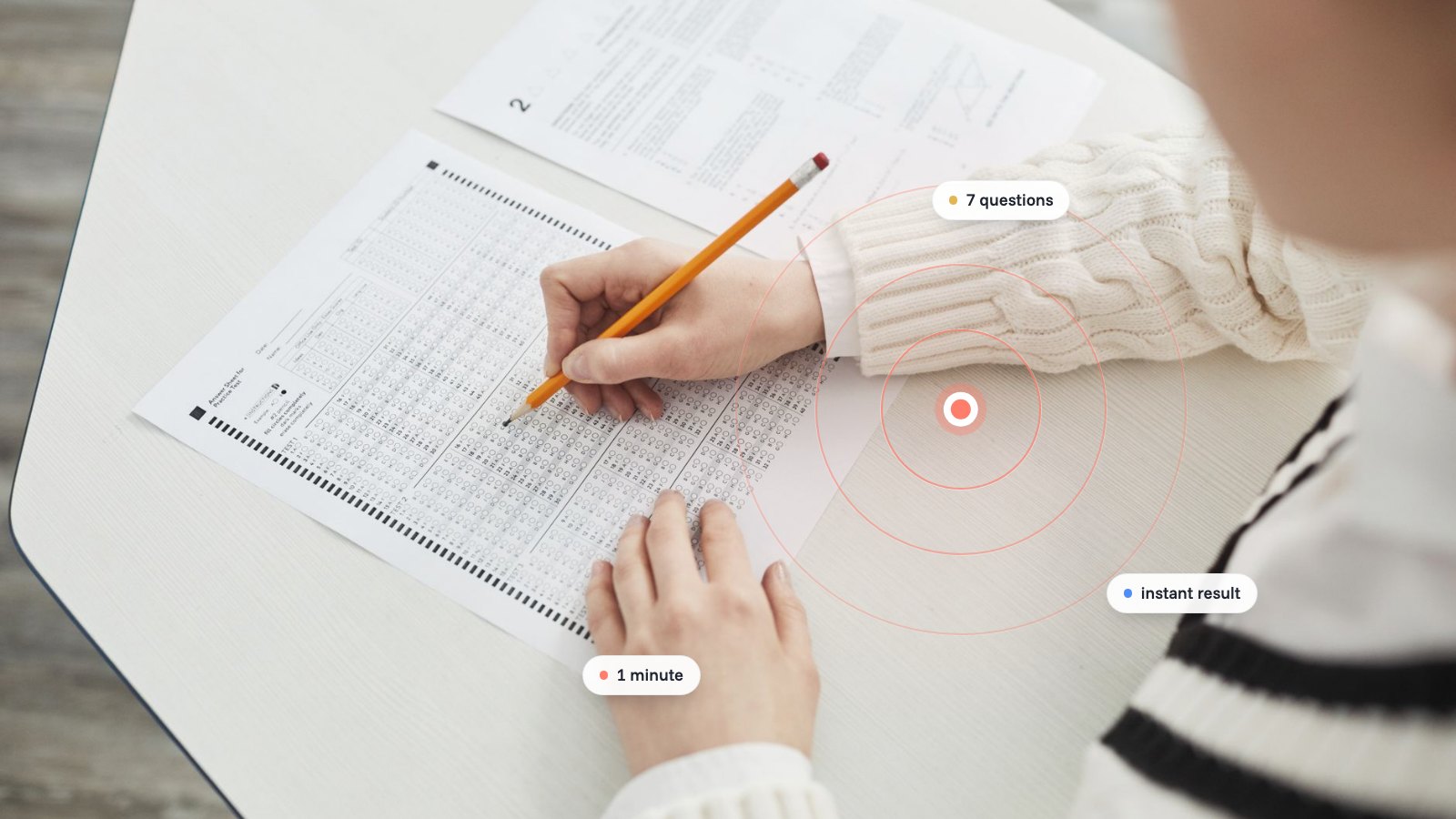
So I wrote down the seven questions I ask on that first call.
The quiz
Answer for the way you sell today rather than the way you hope to sell next year; your result appears below the last question.
Where the questions come from
The first question has a veto. An ABM campaign aims at named companies, each with a buying committee you can map, and a household has no committee, so the consumer answer drags the score below anything the other six can repair.
Sale length decides how many chances you get. When a contract takes months, there is room for an invitation, a first message and a second one from a new angle. When it takes days, the client has bought from someone else before your second message is drafted.
Then the number of people with a say. Forrester counts, on average, 13 internal stakeholders and nine external participants influencing a business purchase1. Your clients will have fewer, but once two people decide, a single email reaches half the room, and an ABM campaign covers the rest by writing to two or three people at each company.
Clients per year is arithmetic. John Dawes of the Ehrenberg-Bass Institute estimates that something like 5% of business buyers are in the market in a given quarter, and 20% over a whole year2; he calls the figure a heuristic rather than a precise rule. On a list of 30 companies that means one or two buying this quarter and about six over the year. Enough if you need a handful of new clients and keep refilling the list. Hopeless if you need four hundred.
On LinkedIn, the quiz assumes one channel: messages from your own profile. If your buyers are not on LinkedIn, ABM can still run through email, calls or events; the quiz cannot see those, so it scores you lower.
What is actually broken? That is question six. If ads and website enquiries already fill the diary, I would not swap a working channel for a fashionable one. Lots of invitations with few conversations scores high for a different reason: in a Gartner survey of 632 B2B buyers, 73% said they actively avoid suppliers who send irrelevant outreach3, and opening every message with a fact about the company is the first fix I would try.
The last question is the one most firms answer too optimistically. Messages go out by hand, one at a time, and in the campaigns I have watched, a campaign someone looks at once a week stalls around week four; my step-by-step guide to an ABM campaign is mostly about getting past that week.
How to read your result
A score of 11 or more means the conditions are in place. The next decision is which companies to start with. Before anyone writes, I would go through the ABM campaign checklist, since in my experience a stalled campaign has missed a step on it.
Between 7 and 10 usually means two kinds of sale under one roof, which is why that result points to a short list of 20 to 30 accounts and a month. A month will tell you whether a message that opens with a fact gets more replies than what you send now, but it is too short to tell you much about contracts, since with roughly 5% of buyers in the market in a quarter most of that list will not be buying yet.
Six or below describes a fast or high-volume sale. For that kind of sale advertising is the better choice. If LinkedIn is the channel on your mind, start with what LinkedIn ads cost and when your team's profiles work better.
A word on scores near a boundary. Many of the firms I talk to sell two things: a small, quick job and a large project that takes a quarter to sign. Take the quiz twice, once for each. ABM may turn out to fit half of your business.
Sources
- Forrester: The State Of Business Buying: Risk-Averse Buyers Demand Proof, Not Promises, 2026 (checked 5 November 2026). forrester.com
- John Dawes, Ehrenberg-Bass Institute: Advertising effectiveness and the 95-5 rule: most B2B buyers are not in the market right now, 2021 (checked 5 November 2026). marketingscience.info
- Gartner: Gartner Sales Survey Finds 61% of B2B Buyers Prefer a Rep-Free Buying Experience, 25 June 2025 (survey of 632 B2B buyers, August to September 2024). Checked 5 November 2026. gartner.com